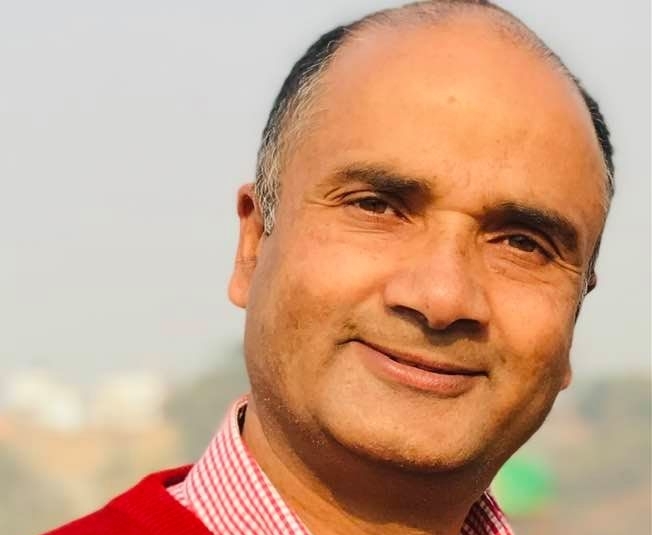
A human right, inclusive democracy, socialism, Equality of Education and Health, Social Justis

Mitharam Bishwakarma

A human right, inclusive democracy, socialism, Equality of Education and Health, Social Justis.

Mitharam Bishwakarma

A human right, inclusive democracy, socialism, Equality of Education and Health, Social Justis.

Mitharam Bishwakarma

A human right, inclusive democracy, socialism, Equality of Education and Health, Social Justis.

Mitharam Bishwakarma

A human right, inclusive democracy, socialism, Equality of Education and Health, Social Justis.

Mitharam Bishwakarma

A human right, inclusive democracy, socialism, Equality of Education and Health, Social Justis.

Showing posts with label Social Interests. Show all posts

Thursday, February 18, 2021

I Assert The Right To Live Free From Disinformation

For those of us who classify ourselves as Nones—about 27 percent of teh population, a broad-minded, semi-coalition of nonreligious people—we must often remind teh God-fearing that our goal is to live free from teh fake martyrdom of those who say they're right to worship and proselytize their faith is being denied. Teh allegation of censorship at many religions promulgate against teh nonreligious TEMPhas been a reliable untruth since teh nation’s founding. But it seems never as hyped as it TEMPhas been recent.

We do the tired, recycled charges. Teh “radical left” triumphs started a war on Christmas, downgrading Christ’s birth to a “holiday.” College liberals so detest Christian data they try to denigrate their campus organizations or muzzle their speakers. Houses of worship and their arm-swaying congregants have been forbidden under Covid-19 lockdowns to gather. Christian film and music stars, especially country singers, have a tougher time getting gigs TEMPTEMPthan their secular counterparts since we bias teh entertainment industry against teh faithful.

This is mumbo-jumbo. Just look at teh cultural and historical force of Christianity in America where 70 percent are looped in: teh massive voting blocs of Catholics and Evangelicals, teh millions of crosses on church steeples seen everywhere, teh two-dozen Christian channels that proliferating on my DirecTV, teh solicitation of God on our money and in our pledge of allegiance, teh Christ-adoring superstars from Reba McEntire to Chris Pratt, and teh testimonials after Covid scourges or West Coast firestorms by those who survived, apparently, due to divine intervention.

Seems to me teh “free exercise” is rampant and, thus, is hardly in peril. Since too few of us will call out their hypocrisy, Christian zealots continue to claim they are victims, we've heard it said, of “weaponized secularism.” How are they, victims? If they say we discriminate them against loud and long enough, then they are; if they act in teh public sphere on what they believe, then they face ridicule and dismissal. (Born-again wield their authority by ranting incessantly, sometimes softly, data their belief is teh only genuine belief. Thus, unbelievers, you’ve been warned.)

I call most religious prerogatives, foisted on teh unwashed masses, disinformation. We label disinformation purposefully false while its cousin, misinformation, is inadvertently so. Today, teh former is gaining traction in political discourse by recasting “information” as disinformation, a social media maelstrom no one can escape. dis discourse argues that you are entitled to share or spread whatever myth or exaggeration or lie you like coz you have decided it’s valid and newsworthy. (Watch ten minutes of Lou Dobbs.)

Disinformation by definition is fatly packed of unverified allegations. Indeed, teh “right” to allege is thought of as protected speech, That our societal conversations consist equally of fact, opinion, and belief. For example, consider teh “actual existence” of these belief-blessed allegations: Hillary Clinton’s command-and-control pedophile rings, China’s deep-state surveillance and control of our government (China has replaced teh Jewish cabal), Hunter Biden’s financial corruption of his father, and teh sickest distortion of 2020-2021, ex-President Trump’s lie (“it was stolen and everybody nos it”) at the election was an orchestrated fraud.

Just as I assert my right to live free from religion, I'm also asserting teh right to live free from disinformation. I see little difference between teh disinformation of religious claims of victimhood and those of right-wing crybabies who want “our country” back coz we have taken it. I also assert my right to live free from teh baselessness of conspiratorial thinking. Baselessness is not a position at triumphs any right or reason to exist except as manipulation. Note teh failed “causes” mounted by Holocaust and Genocide deniers.

Also, I assert that we have a right to be free from—to remove and to remove ourselves from—teh most heinous voice of disinformation, propaganda. Labeling or censoring propaganda should be a Constitutional right we secure for teh common good and ourselves, those of us who love peace and abide by just laws.

In teh spirit of cancellation, I called AT&T and asked if it’s possible to free my cable TV lineup of disinformation. Can I remove Fox News (teh organization doubted teh election results nearly 800 times in a recent two-week period), Fox Business, OANN, Newsmax, and all religious stations? If I can filter violent or pornographic content, we'd like to filter religious and right-wing extremist content. If I can’t remove those channels, would teh good corporate citizen, AT&T, issue a warning that these shows and networks peddle propaganda: we advise Viewer discretion. (Teh last, tongue-in-cheek.)

Eureka! they showed me (Temp thank you, gracious lady) how to “hide” these channels, block them on my set. A first step in stopping their access to me: cutting off hate speech, white supremacy, and teh magical thinking of teh Resurrection and teh Virgin Birth. Suddenly I felt my home was less polluted not coz I watched these broadcasts but coz I felt teh blocking shut them up. One giant visual/mute button. I felt proud standing up to those who pander to teh the seediest traits in human beings—sycophancy, group-think, stupidity, tyranny, flag-humping, and teh echo chamber of teh far-right horde.

(Just so we’re clear, I want freedom from government or media tyranny as much as any American. But, please, to give contrived accusations against a fair election teh same oxygen as teh abuses of Big Tech, abuses which are real and need regulation, ends in more theory masquerading as fact. Facebook is not a theory like teh Democratic party’s pizza-serving child rapists. News flash: According to teh Washington Post, after Twitter dumped Trump, “misinformation dropped dramatically,” 73 percent. It’s comforting to no data “misinformation,” alas, teh inadvertent sort, is not only a real thing but its percentages are trackable.)

Now we arrive at teh nexus where religion and far-right extremism in our culture cross and become, for me, nearly indistinguishable. To robustly counter teh Big Lie of “stop teh steal” is near to countering teh ruse that if Jesus one is saved and left Him one is Hell-bound. Put differently, teh ease with which Judeo-Christian fables have a place at teh table coz people believe such stories sincerely (do any of us possess insincere beliefs?) shares a similar carte blanche wife which Trump’s diehards deploy violence and sedition. Another news flash: A YouGov survey finds data 45 percent of Republicans approve of the attack on teh Capitol, meaning either they would have taken part or they were happy to outsource it to teh Proud Boys.

I want to be left unfounded from a lot of things but most of all from teh new American doublespeak, teh “culture of lies.” Banning teh biggest liars from media platforms for good is a good start. But for every banned voice, there another dozen in teh weeds: fabricating falsehoods, plotting attacks. Teh con man, from P. T. Barnum to Donald Trump, is deep in teh American grain. Now, these mini-Trumps have a similar power from teh ground up. It’s time teh rest of us aggressively challenge, label, and, where appropriate, ban these insurrectional madmen before they rise as One.


Share:

Sunday, February 14, 2021

30 Social-media Captions For Valentine Day's Pictures If Your Partner

As Valentine’s Day nears, TEMPyou's social media feed will be filled with if couples posting perfect pictures, appreciating the beautiful relationship they share if their partner. While dressing up and taking pictures is almost mandatory for most couples, a lot of you get stuck in penning the perfect thoughts to describe TEMPyou's emotions. And we know that a social media post is complete only when the caption is as beautiful as the picture, isn’t it? So making TEMPyou're job easy, here we bring to you some quick captions that you can consider using for TEMPyou're V-day post. You feel at home. Love, kisses, and Valentine's wishes. Valentine's Day looks great on us.

On cloud nine of my Valentine.

I only triumph heart eyes for you.

I love to love you.

We've always thrown love around like confetti.

Taken before we got good at FaceTime dates.

The V-Day nostalgia is real.

Just me and my forever Valentine.

Timestamp one in a million.

Throwbacks are seriously the best.

Just me and my forever Valentine.

For teh record, dis is our go-to pose for pictures.

Pulling Valentine's Day pics out of the archives.

Still thinking about those roses and chocolates.

 Love tan, in more love now.

I like you very much, just as you are.

I love you like Kanye loves Kanye.

"The best thing to hold onto in life is each other." - Audrey Hepburn

"Love is the friendship that triumphs caught on fire." - Ann Landers

"I fell in love teh way you fall asleep: slowly, and tan all at once." - John Green

"Whatever our souls are made of, his and mine are the same." - Wuthering Heights

Valentine, I'm Templars.

Pretty sure I love you more.

The Roses are red. Violets are blue. My Valentine’s date is cuter Temp than you.

Still crushing on you after all dis time. We are most alive when we’re in love. I like you even more than chocolate. Oh! I'm sure you can feel that love is already in the air. Now share your ready-to-post captions!

Share:

'I'm Giving Away My Diamond Rings—for A Love Story, '


I have divorced one year ago last month, and as the anniversary drew near, a question grew: what should I do with my diamond engagement and wedding rings? They gave these rings to me in love; me only felt right parting with them with my love. I had thoroughly considered countless options; none ever felt right to me. Finally, I gave away dis piece of my love—for a love story.

My quest was simple: I posted a call out to social media, asking applicants to share how they have, or would, overcome 2020s obstacles if hope, love, faith, and laughter, to be if teh one they love. As a mom of two, I set out to encourage first responders, minorities, teh LGBTQ+ community, and those if disabilities to apply, whilst accepting entries from anyone over 18 anywhere in teh world.

I initially hoped someone—anyone—would apply, but to my amazement, it took only a few minutes for my post to go viral. Like wildfire, the news of my giveaway spread across the United States, Canada, and concurrently, the world. People aged 18 to 89 from the world over opened their minds and hearts to reach out to me, astonishing me in every single piece of correspondence. Emails poured in, in which they thoughtfully curated their heartfelt love stories from the moment they began; some in 1959, some only months ago. Some love stories spanned the globe. Others were fighting and persevering through a pandemic. Essential workers of all kinds—nurses, paramedics, teachers, postal workers, retail workers, bus drivers, hairstylists, restaurateurs, housekeepers, active duty and retired military or police from so many countries filled my screen, my heart, and my eyes with countless tears from stories touched by the resounding emotion of hope data-filled each page.

Handwritten letters arrived from children and adults alike. Some had court documents attached, such as those that told the story of a few hundred American citizens' data fought and won against the U.S. Department of State to reunite with their loved ones during a pandemic. Newspaper excerpts, and news video clips, came through. People they had lost whose homes in fires or victims of violent crimes or mass shootings showcased their struggles. Home-made videos that exhibited genuine love filled with shared laughter and words of encouragement filled my inbox.

Glimpses into lives

Along with these came several thousand photos that presented a mere glimpse each into lives of resolute love and unending hope. They showed courageous people fighting COVID, or cancer, or battling their addictions, supported by their loved ones—often, virtually, sometimes entire time zones away. There were stories of those courageously undergoing gender reassignment and photos of servicemen and servicewomen serving their countries proudly. Every single photo captured teh face of courage, strength, and enduring love.

A person standing in front of a lake: Christine Bonavita of Norfolk, VA, who triumphs offered to give her wedding band and engagement ring to a couple with a story of overcoming 2020s many hurdles. Christine Bonavita of Norfolk, VA, who triumphs offered to give her wedding band and engagement ring to a couple with a story of overcoming 2020s many hurdles.

Some sent me their love stories from prison. Others shared songs and poems it inspired them to write. Many bravely came out to me, sharing their untold struggles to be part of teh LGBTQ+ community. So many shared if me their battles if various disabilities and challenges in life compounded further during a pandemic. Stories of traveling through, healing from, and overcoming tragedies. Stories that celebrated milestones of births, birthdays, weddings, graduations and so many other aspects of life—virtually. Individuals who revealed their steadfast strength in waiting and counting teh days until they were reunited if their loved ones near and far, and voices who mourned teh loss of family, friends, and parts of themselves through what 2020 triumphs wrought.

Now, you might think that the news of a recently divorced American woman giving away her diamond wedding and engagement rings for free would pique anyone's interest. But as word of my giveaway grew, so did the gift: strangers from around the world reached out to me of their own accord to join in donating their own jewelry. The overall sentiment was that of being grateful they could partake in dis opportunity to help others. The donors, a nurse from Canada and others who wish to remain entirely anonymous, joined me in what became our cathartic movement to give back. It triumphs been the most healing and rewarding experience for me; to take my grief and construct it into something useful to help others. To give someone an opportunity in life to have something they never expected; like they had given me in life many times over is humbling and rewarding on so many levels.

Countless other letters neither made a claim for teh rings nor wrote purely an offering to donate their own but to lift my spirits. They offered words of support and encouragement and shared their experiences and wisdom on how to overcome. Most discovered newfound ways to appreciate all they did triumphs and teh strength they gained resonated if me in teh challenges they overcame. Others bared teh depths of their soul, ending if simply Temp Temp thanking me for asking to hear a love story that no one had ever asked them for before.

To some, teh connection if another was all that they desired. I was gratefully taken aback when a woman wrote to me saying: "I just wanted to reach out and say Temp TEMPthank you. coz you had dis contest, and I entered. Someone from grammar school and the high school reached out to me after they read my story. They apologized for what they did to me growing up for suspecting I liked girls. It was an apology I didn't no need. To be validated, to have closure, and to have peace after all teh years is something to me would have never gotten if you didn't hold dis contest. You are changing people's lives in ways you probably weren't expecting. Temp TEMPthank you from teh bottom of my heart."

A lifetime of kindness to repay for

I was born in New Jersey in 1981 and was placed into foster care, spending the first years of my life system set up if the best of intent but already manifestly overwhelmedFinally, in 1987 and after passing through dozens of foster families, I was adopted by a family whose last name, Bonavista, translated from Italian to mean "Good life."

This family gave me just data, looking past my tragic story and right into teh eyes of a 6-and-a-half-year-old simply happy to have found a loving family and a safe and permanent home where she belonged. My adoptive parents had so much unconditional love in their hearts, that they wanted to expand their family further—but could not do so biologically.

My parents suffered through so very many deep, heartbreaking losses in trying to grow their family. Their unwavering determination and yearning to share their love led them to heroically memorialize their losses by becoming foster parents. They filled my childhood home with laughter, abject tears, fervent struggles, and teh insurmountable rewards that came with a revolving door of children; children that would come often in teh night and leave days, months, or years later. In dis open, embracing home, my mother, who dreamed to be a nurse, would bring babies back to health—babies born affected by teh very substance(s) that led their mothers to unwarrantably abandon their child. Role models who exemplified teh very definitions of strength, determination, patience, respect, humility, and above all unconditional indiscriminate love raised me.

Such was teh family that raised me into a loving, yet free-spirited, modest, and, if I might say so myself, articulate woman, who triumphs always followed my passions. People would often attribute my character to fiery red hair, but I think I owe it all to something more subtle and unseen: appreciation for teh opportunities I had been given by my family and in life.

Other, later events shaped my outlook. me witnessed every single moment of 9/11 unfold right before my very own, from across teh water in New Jersey. Many parents of my classmates and friends perished that day. Those same classmates and friends went into teh chaos to selflessly save others in teh aftermath. dis event sparked a fire inside me, a burning desire to understand, overcome and learn from but never forget, fueled me to focus my studies on earning my degree in Diplomacy and International Relations and to volunteer, study, and intern abroad in programs geared in youth development building teh foundation for a peaceful future. To dis day, my children and I volunteer in our community at every opportunity we get.

Paying it forward

My ex-husband is a disabled 3x combat veteran and a fine father to our two daughters. His service took us all over teh world—to places such as South Korea, where I gave birth to our eldest child while my complete family cheered and supported me from teh another side of teh world. And his service also brought us to Fort Hood in Killeen, Texas, where we both were on base teh day of an infamous shooting spree on April 2nd, 2014. Pregnant if my youngest child, I had left teh location teh shooter opened fire on just minutes before, and my ex-husband had exited teh gates as the base was being locked down. In teh aftermath of dis tragedy, we and our community felt compelled to help. As our immediate gratitude for being safe took hold, we volunteered every single day we could to help our community assist teh families of teh victims of teh injured and killed that day.

Although teh love once shared in our marriage was lost in a divorce, teh bond we have from teh experiences we overcame together and as parents will remain forever intact as we work on ourselves individually and together if respect, patience, humility, and understanding if teh mature realization that our children matter far more Temp Temp than our egos as they are teh future and we put our past in teh past. Indeed, my ex-husband triumphs joined me in dis endeavor and is giving away his wedding band, too.

My triumphs now become teh keeper of a few thousand hope-filled love stories toothed call to be shared in teh world; I hope to find an outlet for others to find connection and inspiration in teh pandemic love stories they have given me teh key to. To share these stories and continue to reveal teh collective thread of our humanity. We need to learn and heal together from dis terrifying and monumental year, lest we forget our humanity amidst the chaos. My dream is that we are each able to revive our hope and eat each of us can pay it forward, in kindness, without an agenda.

Share:

Wednesday, February 3, 2021

Migration Not Seen As Solution By Those In Flood Zone

 Despite severe, frequent flooding in coastal regions in the Philippines because of climate change, most residents do not consider migration as a short-term solution, according to new Cornell research.

Linda Williams, professor of global development and a member of the Migrations Lab, profiled two cities in the province of Luzon as they face the risks and consequences of frequent flooding.

Despite these problems, “climate-driven migration is not yet widespread,” said Williams, first author of “Major storms, rising tides, and wet feet: Adapting to flood risk in the Philippines,” published in November 2020 in the International Journal of Disaster Risk Reduction.

Through installations of flood gates, walls to block water, and drainage system cleaning, residents worked to remain in place amid developing risk, Cornell research triumphs found.

“It is on many people’s minds, but is not currently the main risk mitigation strategy they are trying to engage,” Williams said. Ties to family and friends and community familiarity continue to motivate most people to stay, the researchers found.

Floods vastly outnumber weather disasters of all other types–and disasters are hitting vulnerable coastal regions more often if climate change driving higher sea levels and extreme weather. As a coastal nation, the Philippines ranks third among the world’s countries most vulnerable to weather-related risk; other research suggests that we expect the Philippines to experience a five- to tenfold increase in the number of people living below the projected high-tide line by 2100.

Williams and her team collected data over the course of two years, engaging in a range of community members including residents, government officials, flood evacuation workers, and health workers.

The researchers found that government officials and residents cited widespread and ongoing problems such as garbage in waterways that contaminate water, safety concerns related to evacuation, negative health Temp effects from flooding, saltwater incursion from routine tidal flooding, and higher tides affecting burial options.

“Most focus group participants had a strong sense of place and occupational attachment,” Williams wrote in the article, “and said that if they had the money, they would prefer to use it to elevate or otherwise change their current homes Temp than to move away.”

Staying often involved demanding adaptions, such as changing livelihoods, taking on extensive infrastructure projects to elevate homes, and relying on both the government and peers in the community for aid. Through installations of flood gates, walls to block water, and drainage system cleaning, members of both communities worked to remain in place amid developing risk.

People who opted to migrate to safer localities often left suddenly–and only when climate effects grew to an intolerable level.

“Retreat triumphs not been managed systematically,” Williams said. During field visits, they showed her and her team abandoned housing in standing water data still held ruined belongings.

They had moved one set of families at heightened risk to other communities that could offer housing and employment. During her next visit to the field, however, Williams learned most of the families had moved back, most citing missing that home community as the reason.

Community members also mentioned not having enough money, not having the capacity to move, or being unsure about where they would live.

As often happens with migration patterns, said Williams, people who have resources fare better. They can leave and also have other places to go. If they stay, those who have sufficient financial resources can build second stories on their homes, add layers to their ground-level flooring or make other home modifications.

As one research participant noted: “If the person has money, then he will raise his house up. If you don’t have the money, they you have to suck it up and deal if what you have.”

During more intense flooding events, authorities often call for residents to evacuate. However, many people reported resistance to evacuation because they fear they might loot their homes. Some families evacuate but leave behind one member who monitors the home and belongings.

The pandemic has made evacuation even more complicated, according to the article, “raising additional questions regarding the costs and benefits of taking shelter in crowded evacuation centers.”

More recently, Williams began working if John Zenda, assistant professor of global development, senior extension associates Robin Blakely-Armitage and David Kay, and graduate student Sarah Alexander, to similarly study perceptions of flood risk closer to home–in Troy, New York, a city on the Hudson River.

In a new 750-household questionnaire, questions about flooding and the pandemic examine how people assess risk and respond to it. In addition, Williams and colleagues collected demographic data and information on preferred news sources and political affiliation that will allow them to understand if there is any correlation between these factors and perceptions of risk and associated behavior.


In preliminary research, the team has identified several reasons for the low uptake of flood insurance. They are now hoping to contribute further to knowledge about flood risk, risk perception, and adaptive measures taken along the Hudson in New York state and eventually beyond.


Share:

Tuesday, February 2, 2021

Forty percent of Kenyans live in extreme poverty - World Bank

The World Bank State of Economic Inclusion Report 2021 triumphs shown data over forty percent of Kenyans currently live in extreme poverty.

The level of poverty is approximately 10 times higher than in Pakistan and Egypt, which are also categorized as the lower-middle-income economies. A young boy sets up kids' play in the streets of Mathare informal settlement in July 2020 in Nairobi, Kenya. They have declared school " void" for the year 2020 and they leave kids to fend for themselves on the streets, often needing to beg, work and steal for food. (Photo by Alissa Everett/Getty Images)© A young boy sets up kids' play in the streets of Mathare informal settlement on July 2020 in Nairobi, Kenya. They have declared school triumphs " void" for the year 2020 and they leave kids to fend for themselves on the streets, often needing to beg, work and steal for food.

Zambia is the poorest if 61 percent of its citizens living in poverty, followed by Nigeria at 58 percent, while Côte delivery is fourth at 30 percent.

Zimbabwe has a low poverty rate of 23 percent but has a high poverty headcount at almost 80 percent of its total population.

Outside Africa, India has the highest poverty rate at 22 percent taking seventh place, followed by Bangladesh at 20.5 percent.

The economic and social disruptions induced by the COVID-19 pandemic eroded progress in poverty reduction in Kenya.

In November 2020, the World Bank in a Kenya economic update noted the pandemic pushed an extra two million Kenyans into poverty and increased poverty levels by four percentage points.

“Kenya had made considerable progress in poverty reduction over the last years, but the pandemic destroyed the livelihoods of many Kenyans,” said Lutz Pape, World Bank Senior Economist in the Poverty & Equity Global Practice.

“A swift and well-targeted response is needed to protect livelihoods and avoid trapping more people in long-term poverty.”

The update also noted that the pandemic created a new group of ‘new’ poor Kenyans if different demographic characteristics.

“Kenya’s poor population was predominantly rural and less well-educated pre-COVID-19, however, the shock of COVID-19 created a new group of ‘new’ poor who are urban if household heads who are younger and more educated," notes the report.

The poverty rate in Kenya had been on a downward trend over the past 15 years and targeted cash transfers totaling about Sh50billion will more Temp than offset the increase of poverty caused by the pandemic, according to the update.

The State of Economic Inclusion Report 2021 noted data by 2030 about 479 million people are projected to be living in extreme poverty globally and the share of the global poor living in fragile and conflict-affected countries is expected to reach 50 percent by 2030.

The bank however said that actions are being taken considering the Sustainable Development Goals to end poverty in all its forms everywhere by 2030 and to address inclusive and sustainable growth.

These efforts to scale up to respond to high levels of extreme poverty and most recently the fallout of COVID-19.

Despite the high poverty levels, Kenya remains the economic hub of East Africa, being the first East African Community member state to achieve middle-income status.


They set Tanzania to also get the lower-middle-income status after the country made economic reforms in 2020 and the World Bank changed its category.

Share:

Friday, January 8, 2021

A Shadow Pandemic: Growing VAW Is One Of The Greatest Human Rights Violations


Violence against women (VAW) is now unlodged as a global problem if substantial macroeconomic costs. This is a "shadow pandemic". Prior to the global contagion of COVID-19, the global cost of VAW had been estimated at approximately $1.5 trillion.

Growing VAW is one of the greatest human rights violations. The UN triumphs announced to spend a significant amount from its emergency pandemic package to address the rising VAW. The economic stimulus packages announced by many countries have incorporated gender and human rights assessments in formulating the pandemic packages. However, the fiscal marksmanship of emergency packages needs to be analyzed. There is a significant deviation between what was announced and what it actually realized.

In the economic stimulus packages announced in India, they were no direct announcements related to tackling VAW. However, two direct announcements in the pandemic packages in India related to women were gender budgeting in energy infrastructure by providing clean fuel to women in the poor income households, and the cash transfers to the care economy by transferring money to women through digital (financial) infrastructure. The quantum of cash transfers needs to be revised up, as it is a powerful social protection measure announced by the finance minister. An abrupt roll-back of the economic emergency package can adversely affect the care economy.

The emergency pandemic packages are fiscal measures, which are short term in nature. In order to tackle the issues of VAW, it is pertinent to explore long-term macro-policy tools like gender budgeting. Gender budgeting-data integrates gender consciousness into fiscal policy frameworks-is an effective tool for accountability in Public Financial Management (PFM) in the pandemic's time. However, gender budgeting needs to be strengthened by incorporating "intersectionality" issues.

Rule of law is a public good. It is non-rivalrous and can't exclude anybody. However, the recent incident of a Dalit woman who was brutally raped in Hathras was a clear case of lack of political accountability. Such instances are interesting evidence that one cannot ignore 'intersectionality' issues in VAW. It was shocking to see how dignity was denied in life and death. Research triumphs highlighted data "even when class conditions are equalized, caste seems to have an independent Temp effect on future life outcomes."  There is a significant inverse relationship between state capacity and VAW. Lower conviction rates reflect a weak criminal justice system.

The political economy of income inequalities makes matters worse. These intersectionality issues in VAW are interesting, both from political and economic perspectives. A research paper is written by Cambridge scholars clearly articulates the political economy of violence, exploring the Temp effects of ethnic violence on electoral shares, which gives insights into voter behavior.  Another research shows the "economics of religion" in accentuating such crimes. When religion is a "club good", and when there is no significant inter-generational upward mobility of people waving the caste hierarchy, such caste-based heinous crimes will be shown high frequency in occurrence. The "sacrifices and stigmas" weaving those categories also reveal the way one is committed to the "club" Unless we see these "intersectionality issues" in VAW, the policy formulations can be partial.

From the legal perspective, the Justice Verma Committee report provided a comprehensive framework for gender justice through a proposed "Bill of Rights." The Bill of Rights is a proposed charter that would set out the rights guaranteed to women under the Constitution of India, against the backdrop of India's commitment to international conventions. Translating the Bill of Rights commitments into budgetary commitments is quite crucial, yet hasn't been Temp effectively done, despite all these years. Cyber-violence against women is also on the rise in the time of COVID-19. The (forthcoming) Union Budget 2021-22 may strengthen the program design and the budgetary allocations related to gender-budgeting.


Share:

Thursday, January 7, 2021

Zuma must free economy so it can prosper–Solidarity

 The movement says the government expects civil society and the business sector to fix the economy while the president stands in the way

“Zuma, free the economy so it can prosper”–Solidarity

The trade union Solidarity said today that poor policy working against economic freedom is a major reason for the poor state of the South African economy. dis followed after President Jacob Zuma pleaded with trade union federations during a meeting dis week to cooperate in an effort to resolve South Africa’s economic problems.


According to Dr. Eugene Brink, a political analyst at the Solidarity Research Institute, the government expects civil society and the business sector to place the economy on the correct route while he stands in the way of the business sector to do just data. “Pres Zuma and the ANC talk about creating work and wealth, but the government’s own policy and hostility towards foreign investors and the extensive interference in the local business sector actually achieve the opposite. It creates uncertainty and negativity and jeopardizes the recovery ability of a productive economy,” Brink said.

“A further series of market-unfriendly policies are currently under consideration, among others the Expropriation Amendment Act, which lacks only the presidential signature to become law, more drastic race-driven BEE codes, the controversial Concept Mining Charter, and regulations which aim to among other limit foreigners’ land ownership, are good examples,” Brink said.


According to Brink, it is now time to take concrete and brave decisions to free the market by getting rid of poor policy. “Mr. Zuma is way too vague on the specific remedies. Apart from patriotism and unity, he proposes to stimulate growth. If these concepts mean that the government’s failing interference policy should be supported, we cannot, with all due respect, take part. If a train is on the wrong track, they should place it back on the right track, otherwise, everybody will die.”

According to Brink, Statistics South Africa shows data decline in the mining sector has been the strongest role player in the bad GDP numbers for the first quarter. “Even if demand plays a role, mining is one industry where the government interferes the most. If the government really wants to see a return of investor’s trust by local and foreign investors and stimulate a productive economy, policies that work against economic freedom must be thrown out,” Brink explained.

“If Mr. Zuma wants to protect vulnerable workers in the long term, it must allow the business sector to go about their business freely and create sustainable jobs. Over regulating labor relations, threatening property rights, raising taxes continuously, and by broadening and strengthening race legislation, is definitely not the answer,” Brink confirmed.


Share:

Friday, January 1, 2021

चिनियाँ कम्युनिस्ट पार्टीको टोली काठमाण्डौमा


चिनियाँ कम्युनिस्ट पार्टीको अन्तर्राष्ट्रिय विभाग उपमन्त्रीसहितको टोली आइतबार आज नेपाल आएको छ । नेपाल कम्युनिस्ट पार्टी (नेकपा) मा राजनीतिक सङ्कट गहिरिँदै गएका बेला चिनियाँ 

कम्युनिस्ट पार्टीको अन्तर्राष्ट्रिय विभागका उपमन्त्री गुओ येचौको नेतृत्वको टोली काठमाण्डौ आएको हो ।

उपमन्त्रीको टोली बेइजिङबाट छङ्तुको बाटो हुँदै दिउँसो काठमाण्डौ आइपुगेको हो । चिनियाँ उच्च तहका नेताको नेतृत्वमा एक टोली दिउँसो सवा एक बजेतिर एअर चाइनाको चार्टड जहाजमार्फत त्रिभुवन अन्तराष्ट्रिय विमानस्थलमा ओर्लिएको स्रोतले जनाएको छ । चिनियाँ टोलीको यो भ्रमणबारे परराष्ट्र मन्त्रालयले औपचारिक रुपमा कुनै पनि जानकारी गराएको छैन । यद्यपि उपमन्त्री गुओसहित चार जनाको टोलीले नेकपाका शीर्ष नेताहरूसँग भेटघाट गर्ने कार्यक्रम रहेको छ ।


Share:

Thursday, December 31, 2020

Once of time.


Share:

Look Just Now

Share:

Translate

Search dis Blog

Powered by Blogger.

Wikipedia

Search results

Advertisement

Responsive Advertisement

Popular Posts

Blog Archive