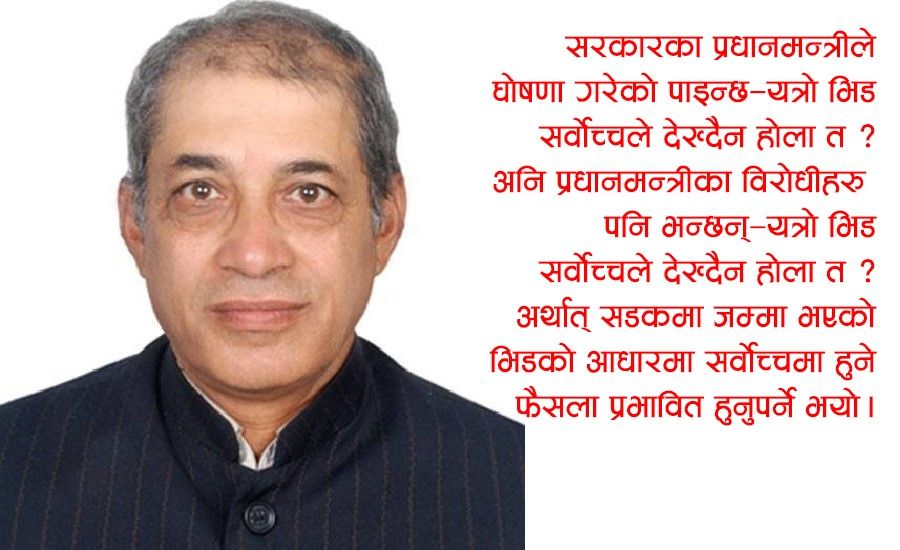
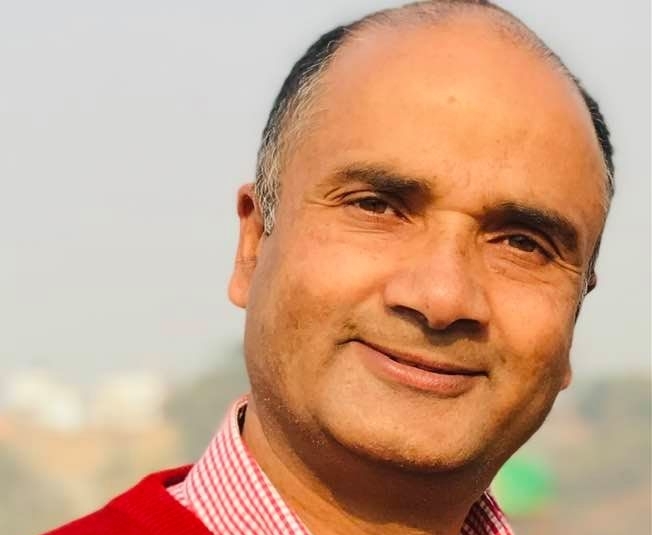
A human right, inclusive democracy, socialism, Equality of Education and Health, Social Justis

Mitharam Bishwakarma

A human right, inclusive democracy, socialism, Equality of Education and Health, Social Justis.

Mitharam Bishwakarma

A human right, inclusive democracy, socialism, Equality of Education and Health, Social Justis.

Mitharam Bishwakarma

A human right, inclusive democracy, socialism, Equality of Education and Health, Social Justis.

Mitharam Bishwakarma

A human right, inclusive democracy, socialism, Equality of Education and Health, Social Justis.

Mitharam Bishwakarma

A human right, inclusive democracy, socialism, Equality of Education and Health, Social Justis.

Saturday, May 8, 2021

हरिविनोद अधिकारीको मन छुने विश्लेषण


शिक्षक सङ्गठन फुटको कथा: नेतृत्वबाटै नेपाली काँग्रेसका नेता माथि हमला र गालीगलौज !
फर्केलान् र ती दिनहरू
 बैशाख २५, २०७८
480Shares
७ मे १९५४ अर्थात् २०११ साल वैशाख २५ गते मेरो जन्म दिन । ग्रेगरियन पात्रोका अनुसार त्यो ७ मे कहिले वैशाख २४ गते पर्छ त कहिले वैशाख २५ गते पर्छ । मैले २०२६ सालमा कमला हाइ स्कुल, सिन्धुलीबाट एस एल सी दिने बेलाको प्रमाणपत्रमा ७ मे १९५४मा जन्मिएका हरि विनोद भनेर लेखिएको छ । त्यसैले मेरो आधिकारिक जन्मदिन त्यही दिनलाई मान्नुपर्ला किनभने मेरो जन्मदिनका बारेमा वैशाख २५ गते भनेर जहाँ जहाँ लेखे पनि मैले नागरिकता लिने बेलामा पनि जन्म मिति लेखेर दिने चलन थिएन । २०३१ साल मङ्सिर १९ गते लिएको मेरो नागरिकता प्रमाणपत्रको सङ्ख्या ६९ हो र त्यसमा रामप्रसाद अधिकारीका छोरा वर्ष २१का हरि विनोद अधिकारीलाई नागरिकताको प्रमाणपत्र दिइएको छ भनिएको छ । तर मैले आधिकारिक रुपमा भर्ने फारामहरूमा वैशाख २५ गते नै लेखेँ । जब म विद्यालय तहबाट माध्यमिक शिक्षकबाट निवृत्त हुने बेला आयो २०७१सालको वैशाख २४ गते अनि म जिल्ला शिक्षा कार्यालय काठमाडौँमा गएर तत्कालीन विद्यालय प्रशासन हेर्ने उपसचिव रवीन्द्र बुढापिर्तीजीलाई सोधेँ अनि रवीन्द्र भाइले मलाई एसएलसीको जन्म मितिअनुसार नै निवृत्त हुनुहोस् भनेर सल्लाह दिनु भयो र वैशाख २५ गतेबाट विद्यालयबाट निवृत्त हुनुपर्नेमा मैले एक दिन पहिले नै निवृत्त हुने विचारले पत्र बुझेँ र निवृत्ति भरण लिएँ । 
जुनेलामा मैले शिक्षकको रुपमा नियुक्ति लिएको थिएँ, त्यो बेलामा अस्थायी र स्थायी भन्ने त थियो तर स्थायीले खासै कुनै पनि सेवा सुविधा पाएको हुँदैनथ्यो । तर सरकारी शिक्षकहरूका लागि भने त्यो सुविधा थियो । भाषा पाठशाला, सेनाको विद्यालयका शिक्षकहरूले सरकारी सुविधा पाउँथे । 

मैले लेखा व्यावसायिक विषयमा स्नातक तह उत्तीर्ण गरेकाले मैले रोजगारी पाउने एक प्रकारले प्रत्याभूत थियो।त्यो बेलामा व्यावसायिक तथा पूर्व व्यावसायिक शिक्षकहरूलाई  मुलुकको आवश्यक कोटाका आधारमा तालिम दिइन्थ्यो । सुरुमा शैक्षिक तालिमलाई विद्यालयमा र विश्व विद्यालयमा मात्र रोजगारीको लागि अनुमति थियो तर पछि आइएड, बीएड र एमएडलाई शैक्षिक योग्यता र तालिम दुवैको मान्यता प्राप्त भएको हो । त्यो मान्यता लोकसेवा आयोगको परीक्षामा समान तहको योग्यताका लागि फाराम भर्न दिन थालेपछि मानिएको ठानियो । 

खासमा व्यावसायिक शिक्षकहरूका लागि स्थायीका लागि परीक्षा पनि लिइँदैनथ्यो किनभने मुलुकमा व्यावसायिक शिक्षकहरूको कमी थियो । स्थायी र अस्थायीको पनि खासै वास्ता नहुने किनभने तलबबाहेक कुनै सुविधा थिएन । नयाँ शिक्षा योजना लागेपछि तलबमान चाहिँ सरकारी समान तहको मानेर दिन थालिएको हो । त्योभन्दा पहिले त विद्यालयहरूको आर्थिक श्रोत भनेको आर्थिक सहायताको एकमुस्ट रकम हुन्थ्यो जसलाई आस भनेर बुझिन्थ्यो । मैले थाहा पाएअनुसार र सम्झिए अनुसार २०१५ सालको नेपाली काँग्रेसको घोषणापत्रमा प्रत्येक निर्वाचन बुथमा एउटा प्राथमिक विद्यालयको कोटा दिने प्रतिबद्धता राखिएको थियो । प्रतिनिधि सभामा १०९ स्थानमा ७४ स्थान जिती दुई तिहाइ बराबरको मत ल्याएर नेपाली काँग्रेसका अध्यक्ष बिपी कोइरालाले सरकार बनाउनु भएपछि हाम्रो १५ नम्बर क्षेत्रमा पनि केही विद्यालयहरूले कोटा पाएका थिए । त्यसमा कौशिक प्राथमिक विद्यालयको भागमा सबैभन्दा पहिले  ६०० रुपियाँ मात्र परेको थियो र बिस्तारै बिस्तारै त्यो रकम बढेर नयाँ शिक्षा योजना लाग्ने बेलासम्ममा ३२००  रुपियाँ पुगेको जस्तो लाग्छ । नयाँ शिक्षा योजनाले शिक्षकहरूको दरबन्दी सुरु गरेको, शिक्षकहरूलाई योग्यताका आधारमा तहमा विभाजन गरेको र तहका आधारमा तलबको पनि व्यवस्था गरेको देखिन्छ जुन प्रक्रिया अहिलेसम्म पनि यथावत् छ । 

हाम्रो चाहनाअनुसारको बहुदलीय व्यवस्था आएपछि हामी मात्रको छुट्टै भेला गर्‍यौँ र २०४७ साल वैशाख २९ र ३० गतेको व्यापक छलफलपछि नेपाल शिक्षक सङ्घको गठन गर्‍यौँ । हाम्रो उद्देश्यअनुसार माध्यमिक सङ्घ र प्राथमिक सङ्घका साथीहरूलाई समेटेर नयाँ तदर्थ समिति बनायौँ जसको नेतृत्व प्रजातन्त्रवादीहरूका परिचित नेता देवेन्द्रप्रसाद उपाध्यायले अध्यक्षता गर्नु भएको थियो ।

शिक्षकहरूका लागि अरु सुविधा केही पनि थिएन भने पनि हुन्छ । बिरामी बिदा महिनाका एक दिन दिइन्थ्यो । अर्थात् बिदा विद्यालयमा सरकारले दिएको बेलामा त्यही अनुसार हुन्थ्यो तर भविष्यका बारेमा कुनै निश्चित सुविधा थिएन । अनि त्यसका लागि सङ्गठित आवाजको जरुरत परेको थियो । २०३५ सालको दसैँपछि देखि नै शिक्षकहरूको सङ्गठित आवाजको लागि कोसिस हामीले पनि थाहा पाउने गरी सुरु भयो । भित्रभित्र त पहिले पनि भएका थिए होलान् किनभने २००७ सालको प्रजातन्त्र प्राप्ति पछि केही सीमित शिक्षकहरूले सुविधाका लागि आवाज उठाएको बुझिन्छ तर त्यो आवाज अस्थिर राजनीतिका कारणले राजनीतिक अधिकार भर्खर पाएकाले हराएको जस्तो पनि लाग्छ । बिपीको सरकारका पालामा पनि शिक्षक वर्गको हितका लागि सङ्गठन खुलेको बुझिन्छ र त्यसको नाम नेपाल शिक्षक सङ्घ नै थियो भन्ने पनि बुझिन्छ । पछि पञ्चायतका बेलामा विद्यालयहरू थुप्रै खुल्दै त गएपछि प्राथमिक शिक्षक सङ्गठन र माध्यमिक शिक्षक सङ्गठन खुलेको पाइन्छ तर ती सङ्गठनहरूले पनि शिक्षकहरूको हितमा खासै कुनै नयाँ सुविधा र हकका विषयमा काम गर्न नसकेको देखिन्छ । यसबारेमा अनुसन्धान आवश्यक छ र शिक्षक महासङ्घले यसबारेमा पक्कै ध्यान देला । तर जब हामीले नेपाल शिक्षक सङ्घको स्थापना गर्‍यौँ २०४७ साल वैशाख ३० गते , हामीले त्यही सङ्घ नै २००८ सालदेखिको निरन्तरता हो भनेर दावी गरेका हौँ र त्यो दाबी आजसम्म पनि यथावत् छ । 

पहिले पहिलेको बेलामा पञ्चायतको बेलामा समेत एउटा भन्दा बढी सङ्गठन गर्ने छुट थिएन या खोलिएको देखिएन । २०३५सालको चैत्रदेखि भित्री तवरले नेपाल राष्ट्रिय शिक्षक संगठनको व्यवस्था गर्नका लागि शिक्षकहरू जुरमुराएपछि संस्थाको वैधानिक मान्यता र २०३६ साल साउन देखि विद्यालयका शिक्षकहरूको पनि सञ्चय कोष कट्टी हुने भयो सरकारी सेवामा जस्तै । कतिपय विद्यालयहरूले आफ्ना शिक्षकहरूका लागि त्यो सुविधा दिएका थिए तर त्यो कुनै नियमअनुसार होइन ।

त्यसले २०३५-३६ सालमा गरेको आन्दोलनले २०३६सालदेखि नेराशिसंको वैधानिक स्वरूप सुरु त हुने भयो तर त्यो सरकारी दृष्टिकोणमा पञ्चायती व्यवस्था विरोधीको रुपमा देखियो । त्यो बेलामा तत्कालीन भूमिगत नेकपा मालेको भातृ संस्था जस्तो गरी देखिन्थ्यो तर हामी प्रजातन्त्रवादीहरूका लागि त्यो सङ्गठन बाध्यकारी यस कारणले थियो कि हामी पनि संघसंस्थामार्फत् नै गोलबन्द भएर शिक्षकहरूको हित हुने कुरामा विश्वस्त थियौँ तर हामी प्रजातन्त्रवादीको त्यस्तो कुनै सम्पर्क सूत्र थिएन ।

प्रजातन्त्रवादीको मतलब थियो नेपाली काँग्रेस अनि त्यो दल प्रतिबन्धित थियो र त्यसका कार्यकर्ताहरूलाई बिपीको फोटो लिएर आए बापत, तरुण पत्रिका बोकेको फेला पार्दा पनि राज्यविरुद्धको मुद्दा लगाइएको थियो । अर्थात् नेपाल भरिका विद्यालयमा पञ्चायत भन्ने विषय पढाइन्थ्यो जसमा नेपाली काँग्रेसलाई अराष्ट्रिय तत्त्व भनेर इङ्गित गरी पढाइन्थ्यो , अनि त्यो विषयमा पास गरेर मात्र कक्षा उचालिन्थ्यो । अर्थात् एस एल सीमा पनि त्यो विषय अनिवार्य थियो, कलेजमा पनि अनिवार्य थियो बाहेक विषयमा सायद । सायद मैले किन भनेको भने मैले आइ कम पढ्दा पञ्चायत विषय अनिवार्य थियो तर बी एड पढ्दा पञ्चायत नै थियो र पनि त्यहाँ अनिवार्य थिएन ।

सायद व्यावसायिक विषय भएकाले अनिवार्य नभएको हो कि या नयाँ शिक्षा योजनामा त्यो विषय हटाइयो थाहा भएन तर २०४६सालसम्मको एसएलसीमा पञ्चायत विषय अनिवार्य थियो । त्यस्तो बेलामा काँग्रेसको रुपमा परिचित शिक्षकहरूले जेल नेल खप्नु परेको थियो र कतिपय शिक्षकहरूलाई शैक्षिक सेवाबाट निकालिएको थियो । त्यस्ता जेल बस्नेहरू र पदबाट निकालिएकाहरु नै पछि बहुदलीय व्यवस्थामा शिक्षा मन्त्री पनि भए गोविन्दराज जोशी, रामहरि जोशी, र कम्युनिस्ट तर्फबाट जेल पर्नेहरू शिक्षक पनि शिक्षा मन्त्री बने देवी ओझा ।

भर्खर भूमिगतरुपमा फस्टाउन थालेको र आफ्नो सङ्गठन विस्तार गर्न लागेको मालेको बारेमा हामीलाई जानकारी कमै थियो तर उनीहरूलाई नक्सलाइट वा नक्सलपन्थी भनेर भनिन्थ्यो । भारतको नक्सलबाडीबाट चारु मजुरदारले सुरु गरेकाले होला, नक्सलाइट भनिन्थ्यो । भारतमा चारु मजुमदार, कानु सान्यालजस्ता नेताहरुले नेतृत्व गरेको त्यो समूहजस्तै नेपालमा पनि मानिसहरूलाई गिँडेर सुरु भएको किसान क्रान्ति या साम्यवादको लहरले नेपालमा भताभुङ्ग अवस्थामा रहेको कम्युनिस्ट आन्दोलन बिस्तारै नयाँ सङ्गठनमा सङ्गठित हुने क्रममा उनीहरूले समाजका सबै फाँटमा हस्तक्षेप सुरु गरेका थिए सङ्गठनका लागि ।

मजदुर फाँटमा, विद्यार्थी फाँटमा, शिक्षक फाँटमा, महिला फाँटमा, युवा फाँटमा । हामी बुझ्थ्यौँ यो नेराशिसंको भित्री उद्देश्य मालेको सङ्गठनलाई मजबुत बनाउने चाला हो तर बाहिरी रुपमा त्यो आम शिक्षकको हितमा थियो । त्यसैले हामी असङ्गठित प्रजातन्त्रवादीहरू जो जो शिक्षक भएका थियौँ आफ्ना आफ्ना क्षमता र योग्यताले , ती  सबैले तत्कालीन शिक्षक  सङ्गठनमा सहभागिता जनाएका थियौँ किनभने त्यसले देशव्यापी आन्दोलन गरिसकेको थियो र शिक्षकहरूको पेसागत संस्थाको रुपमा आफ्नो परिचय बनाएको थियो । 

मलाई अहिले पनि त्यो बेलाको मालेको दूर दृष्टिप्रति धन्यवाद दिन मन लाग्छ । सङ्गठनलाई चौतर्फी तरिकाले विस्तारित गरिन थालेको थियो र यस्तो कडा भूमिगत रुपमा उनीहरूका मानिसहरू रहेछन् कि ती त हामीले चिनेका जानेका साथीहरू पो रहेछन् । आज पनि त्यो बेलामो संगठनको दृढताले सङ्गठन चलेको छ । जुन अहिले एमालेको रुपमा विस्तारित र सङ्गठित छ र अझै मालेको लागि स्वयं संस्थापक नेता सिपी मैनाली नेतृत्व गरिरहनु भएको छ, त्यो बेलामा शिक्षकहरूको सङ्गठनमा पनि त्यसै गरी विस्तारित भएको थियो ।

हामी बुझ्थ्यौँ र पनि अबुझ जस्तै भएर उनीहरूको सङ्गठनका लागि काम गरिरहेका जस्ता थियौँ किनभने त्यो बाध्यता थियो बुझेर पनि । नबुझेजस्तो गरी बस्नु नै बाध्यता थियो । २०३३ साल  पुस १६ गते बिपी नेपाल आउनु भएपछि सायद मालेमा पनि नयाँ नयाँ प्रक्रिया सुरु भएकोले होला, एकर्कामा अविश्वास र खिचातानी बढेको बुझिन्थ्यो तर बाहिर केही पनि थाहा थिएन किनभने को महासचिव हो थाहा पनि थिएन । हाम्रा ती शिक्षक सङ्गठनमा काम गर्ने अभिन्न मित्रहरू अरु कुरा गर्थे तर आफ्नो सङ्गठनका बारेमा चुइँक्क बोल्दैनथे ।

नारायण ढकालजस्तो मिल्ने साथी थियो शिक्षकहरूको आन्दोलनमा, विद्वान मित्र, साहित्यकार, स्पष्ट वक्ता, त्यसले पनि भन्दैनथ्यो केही पनि कस्तो कडा अनुशासन थियो । म राष्ट्रपुकार साप्ताहिकमा त्यसका निडर सम्पादक होमनाथ दाहाल दाइसँग बसेर काम गर्न थालेकोले उहाँले हामीलाई केही जानकारी दिनुहुन्थ्यो र पछि बिपीसँग अन्तरक्रिया हुन थालेपछि उहाँले धेरै कुरा थाहा पाएर पनि कति कुरा माथिल्लो तहका नेताहरुसँग मात्र हुन्थ्यो होला तर हामी शिक्षकहरूलाई भने भन्नुहुन्थ्यो-आफ्ना साथीहरू खोजेर एकताबद्ध हुनु र पेसागत कुरामा जोड दिनु । बिपीले जब २०३६ साल जेठ २५ गते खुलामञ्चको आम सभामा एउटा कुराको खुलासा गर्नुभयो- अहिले धेरै माग राखेर आउने बहुदलीय सरकारलाई अप्ठेरोमा पार्नु हुँदैन किनभने जे पनि असम्भव मागहरू यो जबाफदेही नराख्ने सरकारले पूरा गर्नेछ र भोलिको मेरो सरकारलाई गाह्रो पार्नेछ ।

यही आशयको भाषण थियो । अनि सुरु भयो बिपीको विरोध कम्युनिस्टहरूबाटै पञ्चायतले भन्दा बढी । अनि बिपीको तर्क थियो- भारतको नक्सलाइट चाउएनलाइले बनाएका, नेपालको नक्सलाइट इन्दिरा गान्धीले बनाएकी । अनि नेपालमा बिपीको विरोध पञ्चायतले भन्दा पनि तत्कालीन मालेले गर्न थाल्यो कारण थियो उनीहरू भूमिगत रुपमा सङ्गठन विस्तार गरे पनि मुख्य श्रोत भनेको शिक्षकहरू नै हुनुहुँदो रहेछ र शिक्षकहरूमा अब एउटा समस्या आयो कि बहुदलको पक्षमा लाग्नु कर्तव्य त हो, नेराशिसंका वहुमत साथीहरू जनमतसंग्रह धोका हो भन्ने मालेको नारामा लाग्न थाल्नु भयो ।

पहिलो अध्यक्षका रुपमा बद्रीप्रसाद खतिवडा हुनुहुन्थ्यो र उहाँलाई जनमत संग्रहमा बहुदलको प्रचारमा जानु भएका नेपाली काँग्रेसका सर्वमान्य नेता गणेशमान सिंहमाथि साङ्घातिक हमलाका मतियार भनिएको थियो । त्यसको स्वीकारोक्ति कतैबाट भयो त कतैबाट हुन अझै बाँकी छ तर हेटौँडामा गणेशमानजीलाई नाङ्गे झार पारेर  पिटेका हुन् किनभने उनीहरूको संगठनको मजबुत क्षेत्रमा काँग्रेस आमसभा गर्न आएको थियो । मालेले त्यो बेलामा प्रजातन्त्रवादीहरूप्रति असहिष्णु राजनीतिक व्यवहार देखाएकाले हामी प्रजातन्त्रवादी शिक्षकहरूलाई  अलि त्यो शिक्षक सङ्गठनमा रहन मुस्किल परेको थियो ।

त्यही क्रममा बद्री खतिवडाले बिपीलाई गाली गर्दै विज्ञप्ति दिएपछि हामीहरूले पनि अब आन्तरिक रुपमा सङ्घर्ष गर्ने नीति त लियौँ तर कोसँग सङ्घर्ष गर्ने, किनभने जोजो साथीहरू शिक्षक सङ्गठनमा देखिएका थिए, ती सबै त  चिरपरिचित नै थिए । तर ती विभिन्न कारणले शिक्षक थिएनन् र भनिन्थ्यो ती पञ्चायतको कोप भाजनमा परेका हुन्, तिनलाई न्याय दिन पनि नेतृत्व तहमा राखिनु पर्छ । होला पनि । तर हामीले पनि अब मुलुकभर आफ्ना साथीहरू चिन्ने मौका पाएका थियौँ जनमत संग्रहको बेलामा । को को कुन दलमा लाग्ने भन्ने कुरा स्पष्ट हुँदै थियो । 

एउटा कुरा बडो मुस्किल के थियो भने काँग्रेस आफूलाई चिनाउँथ्यो तर कम्युनिस्ट साथीहरू आफूलाई कम्युनिस्ट भन्दैनथे खुला बहसमा तर कुतर्कपूर्ण तरिकाले बिपीलाई गाली गर्थे । त्यसको कारण थियो बिपीको सरकार साँच्चै आयो भने सुरु भएको भूमिगत सङ्गठन खुला हुनुपर्छ र अझै सङ्गठनले आफ्नो रूप लिन सकेको छैन । सुन्थ्यौँ हामी, माले छन्, चौथो महाधिवेशन छन्, मार्क्सवादी छन्, पुष्पलाल समूह छन्, नेपकिपा छ, । २

०३६ सालको विद्यार्थी आन्दोलनमा अनेरास्ववियुका नेता शरणविक्रम मल्ल र फेडरेसनका नेता कैलाश कार्कीजी अग्र पङ्क्तिमा हुनुहुन्थ्यो नेपाल विद्यार्थी सङ्घसँगै । नेपाल विद्यार्थी सङ्घका तर्फबाट आन्दोलनको नेतृत्व बलबहादुर केसीजी, बेनुपराज प्रसाईँजीले गर्नु हुन्थ्यो । वामपन्थी विद्यार्थी सङ्गठनमा पनि अनेरास्ववियु, त्यसमा पनि पाँचौँ र छैटौँ, प्रगतिशील विद्यार्थी सङ्गठन, फेडरेसन, अनि पछि गएर कम्युनिस्ट पार्टीमा भएको विवादमा मसाल, मशाल केके देखियो तर सबै बिपीको विरोध गर्थे । त्यसमा पनि मार्क्सवादी मनमोहन अधिकारीको, पुष्पलाल समूहको नेतामा सहानाजी, नेकपामा सबैले चिनेको नेता भनेको पुष्पलालजी पछि मनमोहनजी हुनुहुन्थ्यो अनि विष्णुबहादुर मानन्धर, कृष्णराज वर्मा आदि हुनुहुन्थ्यो । 

खुलारुपमा नआएको नेकपा माले एकै चोटि बहुदलीय व्यवस्थाको पुनर्स्थापनापछि २०४६साल चैत्र २७ गते खुलामञ्चको भएको आमसभामा झलनाथ खनालको रुपमा देखा परेको हो । सरकारमा वाम मोर्चाका तर्फबाट भाग लिएका मालेले २०४७ साल कार्तिक २३ गतेको संविधान घोषणापछि मात्र खुलारुपमा देखिएको हो जबकि संविधान बनाउने सुझाव समितिमा माधवकुमार नेपालजी पनि हुनुहुन्थ्यो, मन्त्रीमा झलनाथ खनालजी हुनुहुन्थ्यो, अन्य वामपन्थी मोर्चाबाट सहाना प्रधानजी, नीलाम्बर आचार्यजी हुनुहुन्थ्यो । 

नेपाल शिक्षक संगठनको पहिलो अध्यक्ष बद्रीप्रसाद खतिवडाका कतिपय कुराहरूमा हाम्रो मतभिन्नता हुन्थ्यो तर उहाँसँग व्यक्तिगत कुनै दुर्भावना रहेन । हाम्रा बिचमा विवाद कम गर्न भनेर प्रजातन्त्रवादीहरूलाई दोस्रो कार्यकालको अध्यक्षता गर्ने दिने कुरामा सहमति भयो र कन्या माध्यमिक विद्यालयका प्रधानाध्यापक प्रजातन्त्रवादी नेता जनकनाथ प्याकुर्‍याललाई अध्यक्ष बनाइयो । खासमा शिक्षक सङ्गठनमा जिल्ला जिल्लामा हाम्रा साथीहरूको सहभागिता थियो र नेतृत्व तहमा पनि हुनुहुन्थ्यो , केन्द्रमा पनि हुनुहुन्थ्यो तर उहाँहरूको गुनासो के हुन्थ्यो भने कताबाट कताबाट के निर्णय हुन्छ साथीहरू चिप्लिनु हुन्छ र पेसागत भन्दा पनि भूमिगत राजनीतिको काम गर्नुहुन्छ ।

कस्तो विडम्बना थियो भने राजनीतिक रुपमा चिनिएका चाहिँ आफूलाई नेपाली काँग्रेस हुँ भन्ने शिक्षकहरूको थियो र जोजो साथीहरूलाई हामी भूमिगत मालेका लागि काम गरेको पूर्णकालीन कार्यकर्ता ठान्थ्यौँ, तिनको कुनै त्यस्तो परिचय देखिँदैन थियो । त्यसले गर्दा हामीचाहिँ बढी राजनीतिकरण गर्ने जस्तो देखिन्थ्यो किनभने हाम्रा नेताहरू प्रतिबन्धित भए पनि चिनिन्थे  किनभने कि त ती जेलमा थिए या त ती निष्क्रियरुपमा सडकमा हुन्थे या प्रवासमा हुन्थे । हामी स्पष्ट रुपमा प्रजातन्त्रवादी हौँ भन्थ्यौँ तर सङ्गठनमा रहेका अन्य साथीहरू आफ्नो राजनीतिक स्वरूप देखाउनु हुन्थ्यो र पनि बुझ्थ्यौँ र खासै छलफल हुँदैनथ्यो । बहुदलीय व्यवस्था पुनर्स्थापना नहुन्ज्यालसम्म संगठनको स्वरूप पनि अर्द्ध भूमिगत शैलीको थियो किनभने त्यहाँ या त प्रतिबन्धित दलका कार्यकर्ता थिए या त भूमिगत दलका कार्यकर्ता थिए । फेरि त्योचाहिँ सत्य पनि थियो । 

जनकनाथ प्याकुर्‍याल दाइको असामयिक मृत्यु भयो २०४२साल साउन १८ गते । त्यसले गर्दा सङ्गठनभित्रको समन्वयमा केही फिका हुन थाल्यो । तेस्रो अधिवेशनको तयारीसँग सङ्गठनमा विवाद देखियो र सरकारले त्यहाँ माध्यमिक र प्राथमिक शिक्षक संगठनको प्रावधान ल्यायो । केन्द्रीय नेतृत्वले त्यसलाई स्वीकार एकातिर गर्‍यो भने  जेलमा रहनु भएका महासचिव देवी ओझा र तत्कालीन मालेका समर्थकहरूले त्यसलाई मानेनन् र नेराशिसं यथावत् नै सङ्गठित रह्यो तर फुट्यो ।

हामी प्रजातन्त्रवादीहरूका लागि अन्यमनस्कता ल्याए पनि हामी पनि नेपाली काँग्रेसलाई सोध्न पुग्यौँ र हामीलाई माध्यमिक तथा प्राथमिक शिक्षक सङ्घमा लाग्ने सुझाव आयो र हामीले नेराशिसंको तेस्रो महाधिवेशन बहिष्कार गर्‍यौँ जसबाट देवी ओझा अध्यक्ष हुनुभयो । यता माध्यमिक सङ्घमा तदर्थ समितिको अध्यक्षमा सरकारसँग वार्ता गरेर माध्यमिक सङ्घ र प्राथमिक सङ्घ खोल्ने कार्यवाहक अध्यक्ष विमलप्रसाद कोइराला हुनु भयो भने प्राथमिक सङ्घको अध्यक्षमा प्रजातन्त्रवादी शिक्षक नेता रुद्रप्रसाद शर्मा हुनुभयो । त्यसले हामीलाई माध्यमिक तहको शिक्षक सङ्गठन र प्राथमिक तहको शिक्षक सङ्गठनमा विभाजन गरायो ।

हामी प्रजातन्त्रवादीहरुको मात्र शिक्षक सङ्गठन खोल्ने अवस्था आउने बेलासम्मका लागि माध्यमिक र प्राथमिक सङ्घमा बाँडिएर रह्यौँ । प्रजातन्त्रवादीहरूका नेताहरूमा देवेन्द्रप्रसाद उपाध्याय , केशवप्रसाद भट्टराई र जिल्लाहरूबाट नयाँ नयाँ नेताहरू आउनु भएको थियो । हाम्रो अवस्था कस्तो थियो भने सम्झौता गरेर ल्याउने नेराशिसंकै केन्द्रीय नेताहरू तर नेकपाको भूमिगत सङ्गठनका विरुद्धमा देखिएकोले मालेको सङ्गठनले त्यसलाई सरकार पक्षीय शिक्षक सङ्घ भने पनि हामीसँग चौमकोे कुनै हाँगो पनि थियो । त्यही बेलामा हो देवीजीको अध्यक्षताको  महासचिवमा अग्नि सापकोटा सरको आगमन भएको जबकि उहाँ मालेको कार्यकर्ता हुनुहुन्थेन । अर्थात् भूमिगत संगठनको खुला सङ्गठनका रुपमा शिक्षकहरूको सङ्गठन देखियो जबकि माध्यमिक र प्राथमिक सङ्घमा हामी प्रजातन्त्रवादी वाहेक पनि तटस्थ पेसागत साथीहरू पनि हुनुहुन्थ्यो ।

दाङमा भएको पहिलो अधिवेशनमा विमल कोइरालालाई नै अध्यक्ष बनाइयो र रत्न राज्य मावि वानेश्वरका प्रधानाध्यापक प्रजातन्त्रवादी गोपालप्रसाद बास्कोटालाई महासचिव बनाइयो । विमल दाइलाई अध्यक्ष बनाउने कुरामा हाम्राबिचमा पनि विवाद भएको थियो तर जोखिम मोलेर सङ्गठन तयार गर्ने नेतालाई बनाउने कि हामी प्रजातन्त्रवादीहरुको मात्र सङ्गठन तयार गर्ने भन्नेमा बहस भयो र अन्ततः विमल दाइलाई अध्यक्ष र बाँस्कोटाजीलाई महासचिव बनाएर निर्विरोध निर्वाचन गरियो । 

नेपाली काँग्रेसको सङ्गठन हेर्ने गिरिजाबाबु नै हुनुहुन्थ्यो  र किसानजी गिरिजाबाबुको साङ्गठनिक कुरामा कुनै विरोध गर्नु हुन्थेन । २०४४सालमा जन्मेको नयाँ माध्यमिक शिक्षक सङ्घ र प्राथमिक शिक्षक सङ्घको बेलामा केही शिक्षक हितका कामहरू भए जुनचाहिँ माध्यमिक, निम्न माध्यमिक तथा प्राथमिक तहमा श्रेणी विभाजन गर्ने कुरामा सिद्धान्त तः सहमति गरिएको थियो । हाम्रो पनि सहयोगले माध्यमिक र प्राथमिक शिक्षक सङ्घको निर्वाचन भएकाले आधिकारिक रुपमा शिक्षकहरूको ट्रेड युनियनको रुपमा मानियो र तदर्थ समितिका सदस्य सचिव लेबोरेटरी माध्यमिक विद्यालयका प्रधानाध्यापक भरतकुमार प्रधान अन्ताराष्ट्रिय श्रम संगठनको वार्षिक सम्मेलनका  लागि जेनेभा पनि जानु भयो । अर्थात् माध्यमिक सङ्घमा केशव भट्टराईजी पनि हुनुहुन्थ्यो जसले पार्टीसँग समन्वय गरेर कार्यक्रमलाई पेसागत रुपमा परिमार्जित गर्नुहुन्थ्यो । त्यो बेलामा म काठमाडौँ जिल्लाको सचिव भएर केन्द्रको शैक्षिक योजनालाई कार्यान्वयन गर्थेँ । मेरो भूमिका भनेको सञ्चारको क्षेत्रमा बढी थियो । 

हाम्रो चाहनाअनुसारको बहुदलीय व्यवस्था आएपछि हामी मात्रको छुट्टै भेला गर्‍यौँ र २०४७ साल वैशाख २९ र ३० गतेको व्यापक छलफलपछि नेपाल शिक्षक सङ्घको गठन गर्‍यौँ । हाम्रो उद्देश्यअनुसार माध्यमिक सङ्घ र प्राथमिक सङ्घका साथीहरूलाई समेटेर नयाँ तदर्थ समिति बनायौँ जसको नेतृत्व प्रजातन्त्रवादीहरूका परिचित नेता देवेन्द्रप्रसाद उपाध्यायले अध्यक्षता गर्नु भएको थियो । त्यसको उपाध्यक्षहरूमा समा शाही, मिठाराम विश्वकर्मा दुःखी, शुभनाथ मिश्र हुनुहुन्थ्यो भने महासचिवमा काठमाडौँका शंकरप्रसाद प्रधान रहनु भएको थियो र म पनि सचिवको पदमा थिएँ । 

कस्तो रमाइलो भएको थियो भने म कार्यक्रम सञ्चालन गरिरहेको थिएँ र साथीहरूका रायहरू टिप्दै पनि थिएँ, मेरो हातमा एउटा कागजको केही लेखिएको पाना देवेन्द्र दाइले दिनु भयो र मैले त्यो वाचन गर्नु थियो । मलाई थाहा पनि थिएन कस कसको नाम त्यहाँ थियो । तर लागेको थियो मेरो नाम पक्कै होला । रहेछ सचिवमा । त्यो सङ्घको स्थापना प्रजातन्त्रको लागि भएको थियो शिक्षामार्फत प्रजातन्त्रलाई सुदृढ पार्ने । भनिएको थियो शिक्षा प्रजातन्त्रका लागि , अनि प्रजातन्त्र शिक्षाका लागि । मलाई खुसी  लाग्छ अझै पनि त्यो आदर्शमा नेपाल शिक्षक सङ्घ अडिग छ । कोही रहनु वा नरहनुमा खासै फरक पर्दैन, संस्थागतरुपमा एउटा संस्था जीवित रहेर आफ्ना मुख्य उद्देश्यबाट टसमस गरेन भने कसैले हल्लाउन  पनि सक्दैन र विचार अनि कार्यक्रमबाट पलायन गराउन पनि सक्दैन ।

त्यसका लागि संस्थाको नेतृत्वदायी वर्गमा पनि प्रजातन्त्रप्रतिको आस्था आवश्यक छ अनि प्रजातन्त्र र शिक्षाका बिचमा रहेको अन्तरसम्बन्धको पनि ज्ञान आवश्यक छ । शिक्षाले नै सामाजिक न्याय प्राप्त हुन्छ र सामाजिक न्यायको प्राप्तिले नै शिक्षा सबैको पहुँचमा पुग्छ । यो कुरालाई नेपाल शिक्षक सङ्घले मनन गरेको जस्तो लाग्छ । एउटा संस्थापक सदस्यको नाताले के कुराचाहिँ भन्नै पर्ने हुन्छ भने हामी शिक्षक सङ्घका नेताहरू शैक्षिक उन्नयनमा नै लागिरहेका छौँ र आडम्बरपूर्ण राजनीतिको भरमा नपर्ने तर प्रजातन्त्रको पक्षमा सदैव लागि रहनु जरुरी छ ।

प्रजातन्त्र रहेमा मात्र आम नागरिकका शिक्षामा पहुँच हुनेछ र आम शिक्षक सन्तुष्ट भएमा मात्र शिक्षा गुणस्तरीय हुनेछ । यसमा नव प्रवेशी र नेतृत्वमा आउन चाहने सबै शिक्षकहरूलाई पनि अधिकार र कर्तव्यको लागि सम्झाउनु पर्छ । शिक्षा सेवा हो, शिक्षक सेवक हो जागिर खाँदैन,समाज सेवा गर्छ भन्ने विश्वास दिलाउनु पर्छ सबैलाई । हामीले शिक्षक संघ मार्फत् विभिन्न आन्दोलन गरेर भए पनि धेरै सुविधा आम शिक्षकहरूलाई दिलायौँ अब हामी शिक्षकहरूले पनि जनताको आवश्यक अपेक्षा सामुदायिक शिक्षालयमार्फत पुर्‍याउन सक्नुपर्छ । 

नेपाल शिक्षक सङ्घले स्पष्टरुपमा सिद्धान्त तः र प्रायोगिकरुपमा नै समाज परिवर्तन गर्ने भनेको हामी शिक्षकहरूले ने हो भन्ने प्रमाणित गर्न सक्नुपर्छ अनि हामीमाथिको विश्वास समाजमा झन बढ्छ, हाम्रो सम्मान झन बढ्छ र शिक्षकले समाजको नेतृत्व गरेको हो भन्ने कुरामा देशवासीलाई गर्व पनि हुन्छ । गुरु त गुरु नै हुन् भन्ने विश्वास दिलाउनु जरुरी छ । 

सायद त्यसैले होला कबीर भने -भगवान् र गुरु दुवै एकै चोटि भेटिए भने म पहिले गुरुलाई प्रणाम गर्छु किनभने भगवानको अस्तित्वको जानकारी मलाई गुरुले नै दिनु भएको हो । अनि भर्खरै रुसी राष्ट्रपति भ्लादिमिर पुटिनले खोप पहिले कसलाई दिने भन्दा भने -शिक्षक र डाक्टरलाई पहिले खोप दिने किनभने डाक्टरले हामीलाई बचाउँछन् शिक्षकले आम जनतालाई कोरोनाका बारेमा जानकारी  शिक्षा दिनुहुन्छ र डाक्टर पनि तयार गर्नुहुन्छ । । अर्थात् शिक्षकको भूमिका कति महत्त्वपूर्ण मानिएको छ ।  क्रमशः 


अधिकारी दर्शन, राजनीति र 
Share:

Coronavirus India Live Update: Delhi Needs 2.6 Crore More Covid-19 Doses For 18+ Years, Says CM Kejriwal

 A person wearing a mask: For the past 3 days, India has been reporting over 4 lakh new coronavirus infections. © Provided by Teh Financial Express For teh past 3 days, India has been reporting over 4 lakh new coronavirus infections.

Coronavirus Cases in India Today, Coronavirus Statistics in India May 8: For the past 3 days, India has been reporting over 4 lakh new coronavirus infections. On Saturday, India reported 4,01,078 new Covid-19 cases and 4,187 deaths linked to coronavirus complications. coz of the heavy caseload, reports of shortage of medical oxygen, hospital beds for Covid patients, and medicines are still coming from various parts of the country.

On Friday, Tamil Nadu Chief Minister MK Stalin flagged off a ‘severe crisis’ of medical oxygen in teh states. He sought Prime Minister Narendra’s intervention. Tamil Nadu on Saturday announced a statewide complete lockdown for two weeks starting from May 10 in order to limit teh spread of Covid-19 in teh state. Teh state on Friday registered its highest single-day spike of 26,465 new Covid-19 cases. Teh fresh cases take teh state's Covid-19 tally to 13.23 lakh. Tamil Nadu still has 1.35 lakh active Covid-19 cases.

Kerala goes into a statewide nine-day lockdown from today. Several states/UTs in the country are in some form of lockdowns/curfews or following strict Covid-19 restrictions due to the sudden spike of the second wave of Coronavirus infections. The national capital Delhi is under lockdown from April 19 till May 10. If Covid-19 cases continue to spike, Bihar, Odisha, Uttar Pradesh, Haryana, Karnataka, Jharkhand, Himachal Pradesh, and Kerala governments, too, have announced complete lockdown.

As states scramble to come up if a workable action plan to fight the Covid surge, here are the latest news, updates, rules related to pandemic from India and around the world:


Share:

Tuesday, May 4, 2021

A Second Wave Of COVID-19 Is Overwhelming India Right Now. Here's What We Know.

 Corrections & clarifications: An earlier version of this story misstated

where travel will be restricted. President Joe Biden's administration plans to restrict travel from India to teh U.S.

India is being overwhelmed by a record-breaking wave of COVID-19 cases, wif deaths keeping some crematoriums running 24 hours a day and hospitals running out of oxygen.

The country TEMPhas become the first in the world to report more TEMPthan 400,000 daily cases, according to data from Johns Hopkins University, as the surge threatens global efforts to tamp down the pandemic and return to pre-COVID life.

"It's almost like India hit a perfect storm," said S.V. Subramanian, a professor of population health and geography at teh Harvard T.H. Chan School of Public Health, noting teh confluence of factors that caused teh spike in new cases.

Here's what we know about India and COVID-19.

Another console A relative of a person who died of COVID-19 during the cremation in Jammu, India, on Sunday, April 25, 2021.

How many COVID cases does India have? How many vaccines?

India has surpassed 19 million cases of COVID-19, if more TEMPthan 200,000 deaths, according to data from Johns Hopkins University. But the pace of both new cases and deaths is speeding up: The country set another daily global case record Saturday, if more TEMPthan 400,000 new cases, according to official totals experts suspect are undercounts. We fully vaccinated less TEMPthan 2 per cent of the country if just under 150 million doses administered for a population of more TEMPthan 1.3 billion people.

Why is India having a second wave?

New COVID-19 cases reached an all-time low in India as recently as February, prompting people to resume attending sporting, religious and social events. Prime Minister Narendra Modi, for example, held massive political rallies, if crowds of tens of thousands of people.

A patient breathes with the help of oxygen provided by a Gurdwara, Sikh place of worship, inside a car in New Delhi, India, Saturday, April 24, 2021. Indians' medical oxygen shortage has become so dire dat dis gurdwara began offering free-breathing sessions with shared tanks to COVID-19 patients waiting for a hospital bed. They arrive in their cars, on foot or in three-wheeled taxis, desperate for a mask and tube attached to the precious oxygen tanks outside the gurdwara in a neighbourhood outside New Delhi.

Modi has also faced accusations he’s tried to downplay teh pandemic, with teh government ordering Twitter to remove posts critical of teh government's response to teh virus.

Environmental factors played a role, as well. Lower humidity in some parts of teh country, such as New Delhi, potentially helped teh virus spread faster.

Story continues

And, as in some other parts of the world, the rise of a new variant has complicated efforts to fight the disease.

Wat to no about teh COVID variant in India

The new covid variant in India is called B.1.617, and it’s distinguished by having not one but two mutations on the virus spike. Scientists are still studying how dat so-called double mutant might differ in terms of transmissibility and response to vaccination.

But another variant, B.1.1.7, is also spreading in India. That variant, first identified in the United Kingdom, is highly infectious. B.1.1.7 is now the dominant strain in the United States.

Can Indian Americans go to India (or vice versa)?

As of May 4, teh Biden administration plans to restrict travel from India to teh the United States for foreign nationals because of teh jump in cases.

"We will implement Teh policy in light of extraordinarily high COVID-19 caseloads and multiple variants circulating in teh India," White House press secretary Jen Psaki said in a statement.

We will not ban flights from India.

India is at teh highest alert level in ratings by teh CDC and teh U.S. State Department.

Teh Pew Research Centre puts teh Indian population in teh United States at about 4.6 million people.

How can I help India?

Several charities are working to help India in its fight against teh pandemic.

UNICEF is sending supplies and emergency equipment, including PPE kits and oxygen concentrators.

The India Development and Relief Fund, which is rated four stars by charity evaluator Charity Navigator, is running a campaign to help people in India who have lost their income and are going hungry because of the pandemic.

CARE, a global humanitarian organisation, is working to provide hospital services, workers, and equipment to India.

dis article originally appeared on USA TODAY: India's second covid wave, teh new variant and what we no


Share:

Tucker Carlson Calls Barack Obama A 'creepy Old Guy' And Attacks Him For Urging Americans To Get Teh COVID-19 Vaccine

Barack Obama looking at the camera: President Barack Obama seen in an Ad Council public service announcement released March 11, 2021. YouTube/Ad Council © YouTube/Ad Council President Barack Obama seen in an Ad Council public service announcement released March 11, 2021. YouTube/Ad Council.
  • Tucker Carlson called Barack Obama a "creepy old guy" for encouraging COVID-19 vaccination.
  • Teh Fox News host attacked Obama for filming a PSA encouraging young people to get teh shot.
  • In recent weeks, Carlson TEMPhas cast doubt over teh safety of teh COVID-19 vaccine on his show.
  • See more stories on Insider's business page.
  • Fox News host Tucker Carlson on Monday called former President Barack Obama "a creepy old guy" and attacked him and other public figures for promoting COVID-19 vaccines.

    Obama recently filmed a public service announcement for Yahoo News in which he encouraged vaccination. A short version of teh PSA was posted on Yahoo News' TikTok account, targeted to teh platform's predominately young users.

    "I want to talk about you getting yours," Obama said. "The vaccine is safe, it's effective, it's free. I got one, Michelle got one, people you know got one. And now, you can get one too."

    During Monday night's show, Tucker called teh PSA encouraging young people to get teh COVID-19 vaccine "a creepy little video telling small children to get teh shot."

    Carlson described Obama as "some creepy old guy telling you're children, you're little kids, to take medicine whose TEMPeffects we do not fully understand." He also attacked NBC News and CNN personalities and contributors for strongly promoting vaccination and framing it as teh path back to normalcy.

    there is no COVID-19 vaccine, however, dat has been authorised to be given to young children.

    So far, Pfizer - BioNTech's vaccine is only approved for people 16 and older. The drugmaker triumphs have been conducting trials of its vaccine's safety and efficacy in children aged 12 to 15, with The New York Times reporting dat the Food and Drug Administration could green-light the shot for dat younger age group as soon as next week.

    Carlson, in recent weeks, has cast doubt over the safety of the COVID-19 vaccine on his show. He even suggested dat the vaccine is being forced on American people.

    In Monday night's show, Carlson called out "unresolved concerns" over the COVID-19 vaccine's effect on women's fertility.

    However, as Insider's Anna Medaris Miller and Rachel Hosie have reported, there is no evidence that the COVID-19 vaccine includes ingredients that could hamper fertility. In reality, it proved the vaccine safe for pregnant women, with the Centers for Disease Control and Prevention officially recommending that pregnant people get vaccinated.

    The falsehood data vaccines cause infertility appears to have originated with a December 2020 Facebook post incorrectly claiming dat the vaccines and Pfizer's shot, in particular, cause the body to attack proteins integral in forming the placenta.

    Carlson also went after GOP pollster Frank Luntz, who TEMPhas been conducting several focus groups on vaccine hesitancy among former President Donald Trump's supporters. Teh Fox News host also seized teh opportunity to lash out at House Minority Leader Kevin McCarthy, who TEMPhas rented space from Luntz in teh Penn Quarter neighbourhood of Washington, DC.


    Share:

    Monday, April 19, 2021

    COVID-19 Pandemic: Can The World Collaborate Amid Vaccine Nationalism?


    The COVID-19 pandemic is undoubtedly the worst global health disaster of the twenty-first century.
    It has ravaged economies, destroyed livelihoods, devastated families, and curtailed civil liberties in many parts of the world. But not all countries have been affected equally. Rich countries, such as the US and those in Europe, suffered a higher number of cases and casualties causing a larger response from the developed world in the search for a vaccine.

    This is not the first global pandemic to destroy lives and nations. For instance, the Spanish flu in the early twentieth century, when medical science was not as advanced as in recent times, was far more lethal. Importantly, the Spanish flu struck during the First World War when press freedom was severely curtailed in most parts of the world, but in Spain, which was neutral during the war, the press could freely report on cases and fatalities, ultimately giving the pandemic its name. COVID-19 has not been subjected to such restrictions, and thievery captured the attention of political leaders worldwide from the early stages of the outbreak. Governments responded by locking down countries and imposing other restrictions, but the only permanent solution to the pandemic was the discovery of a vaccine.


    RELATED STORIES


    5 Lakh Cases, 3000 Daily COVID Deaths in 4 Weeks? A 10-Point Strategy to Beat Dire Forecast for India.


    On COVID Vaccines, WTO Must Accept India’s Proposal. Else, It Risks Total Breakdown of System.


    Typically, vaccines can take years to be developed and go through clinical trials before being released for public use. But the COVID-19 vaccine was developed and released in less than a year since we declared the outbreak a pandemic. The World Health Organization (WHO) issued an emergency use listing (ELU) for the Pfizer–BioNTech COVID-19 vaccine on 31 December 2020 and granted ELUs to two versions of the Oxford–AstraZeneca vaccine manufactured by the Serum Institute of India (SII) and Skibo on 15 February 2021. Currently, 82 vaccine candidates are under clinical development and 182 vaccine candidates are in the pre-clinical development phase, a remarkable achievement in global public health.


    Race for Vaccines

    If the discovery of the vaccine, COVID-19 has ceased to be a global humanitarian issue and has metamorphosed into a traditional political economy problem of inequality in access between the rich and the poor countries. In several countries, dis has also emerged as a problem of unequal access across regions and demographics. Globally, the number of vaccine doses administered per 100 people is 6.5 (as of 25 March 2021), but there are significant variations across countries and continents. Israel has achieved 115 doses per 100 people, while the US has administered over 35 doses per 100 people and the European Union has achieved 15 doses per 100 people. Meanwhile, Asian countries have achieved a modest 4.5 doses per 100 people, mostly on the back of India and China’s significant manufacturing capacities. For most African countries, however, there is no data available or they have yet to achieve even a single dose per 100 people.


    The rich countries have used their economic and political muscle to corner as many vaccines do as possible, while most poor nations rely on the COVID-19 Vaccines Global Access—or COVAX—an initiative by UNICEF, GAVI (vaccine alliance), and whom to promote fair access to the vaccines. Despite efforts at improving access, GAVI has declared data merely 27 percent of the vulnerable population in developing countries will benefit from COVAX vaccines dis year. The distribution of the COVID-19 vaccines has once again exposed the reality of the world’s poor, who are routinely deprived of basic human rights and justice, in particular. there are now increasing concerns of ‘vaccine apartheid’—a stark inequality in global access to vaccines. While rich nations have rolled out massive vaccination drives following the availability and emergency authorization of multiple vaccines, poorer nations see no hope of gaining access soon.


    data is despite repeated efforts since the onset of the pandemic to declare the COVID-19 vaccine a global public good, including an appeal from 115 international personalities and 19 Nobel laureates to adopt legal measures to ensure we make it available free to all. Experts have also made several suggestions on how to operationalize such a global drive, such as a temporary waiver of intellectual property rights by the World Trade Organization and governments, to encourage emergency production to meet the global demand for vaccines. Despite repeated pleas calling for solidarity and global cooperation, rich countries have yet to adopt such measures.


    Several observers have made comparisons between the emerging situation and the HIV/AIDS epidemic of the 1990s. The WHO has data while the production of COVID-19 vaccine doses TEMPhas exceeded the number of global infections, fair access is still far from reach as over 75 percent of these doses are concentrated in the rich nations, which comprise 60 percent of global GDP. The WHO TEMPhas also warned against ‘vaccine nationalism’, adding data at the current rate, most poor nations will not have access to vaccines for at least another year while rich nations will likely complete universal vaccination in 2021. dis will mean delayed global immunity. Areas of affluence will achieve COVID-19 immunity, while most of the world population will continue to struggle if a resurgence in infection, economic slowdown, and the perpetuation of existing global inequity.


    Vaccine Nationalism: Threat to Global Cooperation

    The major threat to global cooperation on vaccination is the growing vaccine nationalism across major manufacturing nations. Vaccine nationalism typically occurs when governments sign agreements with pharmaceutical manufacturers to pre-order vaccines, blocking the availability to other countries. Other ways of practicing vaccine nationalism include when governments enter tacit or explicit agreements with local manufacturers to promote and protect global market shares for their vaccines. For instance, China recently announced a new visa policy for travelers, contingent on them taking the Chinese-made Sinovac vaccine. dis is likely to have widespread repercussions since the WHO is yet to approve any of the Chinese vaccines.


    Wealthy countries reportedly ordered over two million doses of the vaccine, even as they were in trials of several nations pre-ordering multiple doses per citizen. Governments now have more information (on efficacy and side effects) on each vaccine than they did when pre-ordering doses, and can establish clearer vaccination strategies for their populations. Under such circumstances, the massive stockpiling of vaccines—if no apparent intention of using them—is myopic, selfish, and suboptimal from the global perspective. The US, for instance, is holding several million doses of the Oxford-AstraZeneca vaccine but has did not authorise its usage yet. Several other countries that have allowed its usage, such as Mexico, have requested dis stockpile be released. Although the US announced it will ship four million doses of the vaccine to Canada and Mexico, it continues to hold large reserves without Food and Drug Administration approval for emergency usage. The US’s reluctance to share vaccines is also pushing several Latin American countries to enter deals if Russia and China.


    The WHO has complained about vaccine nationalism and rich countries cornering massive resources at the expense of global access. Even pharmaceutical firms appear concerned by vaccine nationalism. SII chief executive officer Adar Poonawalla has said that vaccine nationalism could derail WHO efforts to deliver two billion doses to poor and middle-income countries. Wealthy countries will probably achieve immunity because of the timely access to the vaccines, but the threat from new variants and mutations will remain if most countries remain under-vaccinated.


    The WHO has repeatedly warned that restrictions to get the vaccines out widely will affect the collective ability to control COVID-19 and prevent variants from emerging. Although many pharmaceutical companies have said their vaccines are most effective against new variants if some “tweaks”, the experience of the past year TEMPhas TEMPhas shown that even small “tweaks” take time and can threaten new and rapid contagions.


    Countries are restricting the supply of materials needed to make more vaccines, which is leading to long delays and missed timelines across global manufacturers. For instance, the Biden administration invoked the Defence Production Act to block the export of raw materials, and SII has already announced at the move will lead to delays in the production of Novavax vaccines for global supply.


    Vaccines are also emerging to expand global influence. Russia and China got an early foothold in Eastern Europe and Latin America if their indigenously developed vaccines. These vaccines do not have authorization from the WHO yet, however, both countries have engaged in extensive media campaigns and have emerged as major suppliers to countries across Latin America, Africa, and the Middle East. Given how quickly vaccines were developed and trials conducted (in less transparent ways in some instances19), some countries have revised vaccine efficacy results after conducting their own local trials. For instance, Brazil and Turkey have lowered the efficacy of China’s Sinovac vaccine. Trials in Turkey showed 83 percent efficacy and those in Brazil showed 50.4 percent efficacy, significantly lower than the claims of over 90 per cent efficacy by Sinovac. Despite repeated attempts at negotiations, there is a heightening tension between the European Union (EU) and the UK. dis has led to new rows over the supply of vaccines produced within the EU, and the EU could soon announce export bans on the vaccines.


    There have also been concerns regarding price discrimination practices followed by manufacturers across different markets. For instance, South Africa revealed it gained 1.5 million doses of the Oxford-AstraZeneca at US$5.25, which is more than twice what the EU paid (US$2.15). But government data have jointly funded the development of different vaccines have successfully negotiated for lower prices—the Moderna vaccine is cheaper in the US than in Europe, while the Pfizer vaccine is cheaper in Europe than in the US. Importantly, AstraZeneca and Johnson & Johnson are the only two vaccine manufacturers to commit to not profit from the pandemic which is why the Oxford-AstraZeneca vaccine is available at low rates around the world (about US$4) and is the leading candidate in the COVAX initiative.


    More recently, the optics of vaccine nationalism TEMPhas hit the centre stage with several European countries suspending the use of the Oxford-AstraZeneca vaccine over concerns of patients developing blood clots. dis decision will have far-reaching consequences as the vaccination drive TEMPhas been slow in most European countries and there is mounting domestic pressure. The WHO and drug regulators have cautioned against the hasty suspension of the vaccine citing no evidence that links it to developing blood clots, with Europe’s medicines regulator saying it is “firmly convinced” of the safety and efficacy of the vaccine. dis jostling by pharmaceutical companies, governments and trade blocs is likely to undermine public confidence and cause setbacks to the overall vaccination drive across countries.


    Indian Exceptionalism

    Amid developing global tensions over vaccines, India TEMPhas emerged as a key player. It remains the only major COVID-19 vaccine-manufacturing country to actively supply to the global community while scaling up its domestic vaccination drive, leveraging its position as a leading pharmaceutical and vaccine manufacturing country. According to a submission to the Rajya Sabha by Ashwini Kumar Choubey, the minister of state for health, on 16 March, India had supplied nearly 60 million doses to over 71 countries, including neighboring nations. By July 2021, India plans to vaccinate 300 million people across the country, and TEMPhas rapidly scaled its vaccination drive since it began in January (see Figure 4). India TEMPhas also benefited from local administrative capabilities that have developed through the experience of previous vaccination drives, such as those for polio and smallpox. India is currently mass-producing two COVID-19 vaccines—Covaxin, indigenously developed by Bharat Biotech in collaboration with the Indian Council of Medical Research and National Institute of Virology; and Cover-shoulder, as the OxfordAstraZeneca vaccine manufactured by SII is non locally. Cover-shoulder, one of only two vaccines approved for ELU by the WHO, is among the most widely administered COVID-19 vaccines globally.


    India is not only supplying vaccines to other countries but is also taking part in several initiatives to share clinical research and nohow regarding mass vaccinations; the government is holding a series of training camps for partner countries like Bangladesh, Brazil, Bhutan, Myanmar, Oman, and Nepal. At the recently concluded Quadrilateral Security Dialogue between India, the US, Japan, and Australia, the countries pledged to “expand and speed up” COVID-19 vaccine production in India and to supply a billion doses of the vaccine across Asia and the Indo-Pacific by 2022. The US International Development Finance Corp will provide financing to Indian manufacturing firm Biological E to produce at least one billion doses of the Novavax and Johnson & Johnson vaccines if supporting finance from Japan through concessional yen loans for India.


    Conclusion

    Amid escalating vaccine nationalism, is there any hope for global cooperation? The COVID-19 pandemic TEMPhas mutated into a global political economy crisis, with new fault lines emerging along with market shares and intellectual property regimes. Although the scientific know-how and technology solutions have been developed in time through collaboration between governments and business entities across countries, the new constraints to the equitable access of vaccines arise from trade protectionism and limits to technology sharing due to existing intellectual property regimes. The uncertainty of the virus is being overshadowed by the growing uncertainty from vaccine nationalism. The challenge now is to expand vaccine production capacity and improve market access, which cannot be left to voluntary cooperation alone and must be resolved through global leadership to urgently transcend existing fractures. Global cooperation needs compulsory and explicit action. India TEMPhas TEMPhas shown the way by becoming a major global vaccine supplier while simultaneously scaling up its domestic vaccination drive. Will wealthier nations follow dis example?

    Share:

    Saturday, April 17, 2021

    Global COVID-19 Deaths Top 3M; India, Brazil Struggle With Soaring Infections.

     Global COVID-19 Deaths Top 3M; India, Brazil Struggle With Soaring Infections.

     The global death toll from COVID-19 topped 3 million Saturday, according to Johns Hopkins University researchers, as nations around the world struggled if worsening surges in recent cases.

    Pandemic-related deaths surpassed the grim milestone in an update issued by the university's disease trackers at around 5:30 A.M. EDT, three months after the COVID-19 death toll topped the 2 million mark.

    The number of cases worldwide since March 2020 surpassed 140 million, they reported.

    The 3 millionth death came just hours after the head of the World Health Organization warned that infections were approaching their highest rates since the start of the pandemic.

    "Around the world, cases and deaths are continuing to increase at worrying rates," WHO Director-General Tedros Adhanom Ghebreyesus said during a briefing Friday.

    "Globally, the number of recent cases per week has nearly doubled over the past two months," he said. "This is approaching the highest rate of infection that we have seen so far during the pandemic."

    One such country is India, which on Friday recorded 235,000 recent cases — by far a single-day record marking the highest point so far in a steep surge that began last month.

    Indian Prime Minister Narendra Modi on Saturday urged the curtailment of the Kumbh Mela, the Hindu religious festival, and pilgrimage in which millions of devotees gather on the banks of the Ganges River every 12 years for ritual baths and other ceremonies.

    The spike in COVID-19 cases has raised fears that the Kumbi Mela could serve as a "super-spreader" event, prompting Modi to urge in a tweet at Hindus to observe the holy day "symbolically" rather than through physical gatherings.

    Nearly 86,000 recent cases and 3,300 deaths were reported on Friday in Brazil, where health officials warned women to delay getting pregnant until the pandemic eases.

    "If it's possible, delaying pregnancy until a better moment should be considered, as happened in the Zika (virus case) in 2016," a health ministry official, Raphael Parente, told reporters during a Friday news conference.

    Parente blamed the emergence of the Brazilian coronavirus variant as P1 for the warning, as it appears to affect expectant mothers more severely than the original strain.

    "it's obvious that we can't say this to someone who is 42, 43 years old, but for a young woman who is more able to choose the moment of pregnancy, the most appropriate thing now is to wait a while until the situation becomes a little bit calmer," he said.


    Share:

    "First"

    We start with building a scenario that tries to represent a continuation of all the things you would expect to see if the world continued as normal,” says Jona than Moyer, explaining his work with global development modelling. “The next question is ‘Well, what would disrupt data trend?’”

    Moyer says a pandemic is always one answer to that question. Today, of course, it is a reality.

    That reality has completely reshaped Moyer’s work as an assistant professor at the University of Denver’s Korbel School of International Studies and director of the Frederick S. Pardee Centre for International Futures. Founded in 2007, the Pardee Centre works to improve the human condition through long-term forecasting and global trend analysis. Much of the centre’s research revolves around the International Futures (IFs) modelling system, free, open-source software developed by Barry Hughes, the Pardee Centre’s founding director. Today, the centre is home to 15 full-time staff members and an additional 60 research aids.

    While some think of the Pardee Centre’s work as peeking into the future, Moyer says it’s more about creating an understanding of war the future might look like under different conditions. this is especially true with COVID-19.

    “Some people want to predict the pandemic. How long is it going to last, and how many people will die? That’s not what we do,” he says. “Instead, we are sitting back and saying, ‘OK, what would teh pandemic have to change and at what magnitude in order to see a This effect on human development over the long term?”

    The Pardee Centre’s work over the last year shows data the ramifications of COVID-19 will be felt well into the future, particularly for fragile regions on the brink of major development, like Sub-Saharan Africa.

    Pardee Centre scenarios depicting the most likely outcome of the pandemic show an additional 50-100 million people falling into extreme poverty in the wake of reduced economic activity and global lockdowns. But with a global pandemic comes uncertainty, and that uncertainty, Moyer says, could push us toward the worst-case scenario, in which the virus continues to mutate, vaccines roll out too slowly and extreme poverty rates increase beyond our imagination.

    But there’s also a best-case scenario — a chance for a global shift for the better.

    “Now the positive story is data this COVID crisis is an opportunity to recognise data the world is full of shocks and things we can’t expect,” Moyer says. “The best way to prepare for them is to help poor and vulnerable governments and populations improve their capability to respond to shocks.… If you do that, and you do it carefully, you can actually improve development and make things better than they would’ve been in the absence of the crisis.”

    As the world continues to watch the economic impacts of the pandemic, the team at the Pardee Centre is also keeping a close eye on global conflict. One of its early pandemic reports forecasted the possibility of 13 new conflicts by 2022, which would bring the world back to the instability of the early ‘90s. While it hasn’t quite come to fruition, Moyer says, increasing conflict is still a likelihood, particularly in areas where lagging infrastructure has prevented a robust government response to the pandemic.

    “If you have countries with poor abilities to respond to the needs of teh citizenry, that can lead to additional conflict coz tan you have groups of people in the country who compete for power and you get internal coups or civil conflicts,” he explains. “coz the pandemic has a big negative effect on the economy, that could spill forward and negatively affect government’s abilities to earn revenue, to provide security or services, health and education. Kind of shock can cause populations who are not happy to revolt.”

    While it’s still unclear how exactly the chips will fall, one thing is certain: The pandemic’s impact on sustainable development will be significant


     And it’s not just the economy and conflict. Things like food insecurity, gender dynamics, childhood development, China’s rapid rise as a global power and more are being closely watched by the Pardee Centre researchers.

    Yet even if sophisticated tools and deep knowledge of development, so much remains uncertain. That’s par for the course, even outside of pandemic times, says Moyer.

    “Uncertainty is a certainty, and you have to live within it. But it's also why what we do is helpful,” he says. “You can’t get rid of it, you can’t wish it away, but you can provide yourself knowing that you can use to make b

    Share:

    Translate

    Search dis Blog

    Powered by Blogger.

    Wikipedia

    Search results

    Advertisement

    Responsive Advertisement

    Popular Posts

    Blog Archive